Property-Based Testing, briefly
1. Write a property
prop_reverse_involutive :: [Int] -> Bool
prop_reverse_involutive xs =
  reverse (reverse xs) == xs
2. Generate inputs
quickCheck prop_reverse_involutive
-- +++ OK, passed 100 tests.
3. ...or find a counterexample
prop_sort_idempotent :: [Int] -> Bool
prop_sort_idempotent xs =
  sort xs == sort (sort xs)  -- pretend buggy
*** Failed! Falsified after 7 tests
and 4 shrinks:
[0, -1]
What's actually happening?
A property runner is a loop over a property.
generate, check, generate, check...
shrink, check, shrink, check...
print
...but there's a whole zoo of them
Simple generational
QuickCheck-style
Integrated shrinking
Hedgehog / Hypothesis
Coverage-guided fuzzing
AFL-style
Targeted PBT
custom feedback
Combinatorial
systematic coverage
Parallel
many workers
Problem
- Runners are hardcoded within frameworks.
- QuickCheck does generate-and-check.
Hypothesis does integrated shrinking.
AFL does coverage-guided fuzzing... - Want to combine two? Rewrite from scratch.
- Why? Properties are shallowly embedded: tightly coupled to how they run.
Three ways to embed a property
Deferred Binding Abstract Syntax
Turn the property into a data structure
diagram
Simple runLoop
Generate, check, generate, check...
Fixpoint runLoop' fuel passed discards :=
  match fuel with
  | O      => ret (mkResult discards false passed [])
  | S fuel' =>
    input  <- gen cprop (size_log2 ..);;
    res    <- run cprop input;;
    match res with
    | Normal seed false =>
        let shrunk  := shrinker cprop seed in
        let printed := printer cprop 0 shrunk in
        ret (mkResult discards true (passed+1) printed)
    | Normal _ true   => runLoop' fuel' (passed+1) discards
    | Discard _ _     => runLoop' fuel' passed (discards+1)
    end
  end.
Coverage-guided fuzzing fuzzLoop
AFL-style: seeds that hit new branches survive and breed.
Fixpoint fuzzLoop' fuel passed discards seeds :=
  match fuel with
  | O      => ret (mkResult discards false passed [])
  | S fuel' =>
    let directive := sample seeds in
    input <- match directive with
             | Generate     => gen cprop (log2 ..)
             | Mutate src   => mutate cprop src
             end;;
    let '(res, fb) := instrumentedRun cprop input in
    match res with
    | Some false =>
        let shrunk  := shrinker cprop seed in
        let printed := printer cprop 0 shrunk in
        ret (mkResult discards true (passed+1) printed)
    | Some true  =>
        let seeds' := if useful seeds fb
                      then invest (input, fb) seeds
                      else seeds in
        fuzzLoop' fuel' (passed+1) discards seeds'
    | None       => fuzzLoop' fuel' passed (discards+1) seeds
    end
  end.
Targeted targetLoop
User-defined utility(input) instead of coverage. Hill-climb toward bad inputs.
Fixpoint targetLoop' fuel passed discards seeds :=
  match fuel with
  | O      => ret (mkResult discards false passed [])
  | S fuel' =>
    let directive := sample seeds in
    input <- match directive with
             | Generate     => gen cprop (log2 ..)
             | Mutate src   => mutate cprop src
             end;;
    res <- run cprop input;;
    match res with
    | Some false =>
        let shrunk  := shrinker cprop seed in
        let printed := printer cprop 0 shrunk in
        ret (mkResult discards true (passed+1) printed)
    | Some true  =>
        let fb := feedback_function input in
        let seeds' := if useful seeds fb
                      then invest (input, fb) seeds
                      else seeds in
        targetLoop' fuel' (passed+1) discards seeds'
    | None       => targetLoop' fuel' passed (discards+1) seeds
    end
  end.
Stateful statefulLoop
Property is a sequence of steps over a state. Each step's gen sees the current state.
Fixpoint runTrial state fuel step_idx trace :=
  match fuel with
  | O       => ret (None, ..)
  | S fuel' =>
    res <- generate_and_run cprop (state, ..);;
    match res with
    | Normal inputs false =>
        let shrunk := shrink_step 10 state inputs in
        ret (Some (List.rev (info :: trace)), ..)
    | Normal inputs true  =>
        let state' := transition state inputs in
        runTrial state' fuel' (S step_idx) (info :: trace)
    | Discard _ _         => runTrial state fuel' step_idx trace
    end
  end.
Two implementations, two type disciplines
Rocq (QuickChick)
- Dependently typed
- Properties carry their types in the AST
- Runners check well-formedness statically
Inductive Prop' : Type :=
| ForAll : forall {A}, G A ->
           (A -> Prop') -> Prop'
| Check  : bool -> Prop'.
Racket (RackCheck)
- Dynamically typed
- Macros + reflection make runner-as-interpreter natural
- Rapid prototyping
(define-property prop-rev
  ([xs (gen:list gen:nat)])
  (equal? (reverse (reverse xs))
          xs))
Evaluation: what does DBAS unlock?
- All six runners, swappable, on the same property
- Integrated vs external shrinking
- Parallel PBT
- Novel runner experiments: seed pools, energy heuristics, ...
Shallow vs Deep
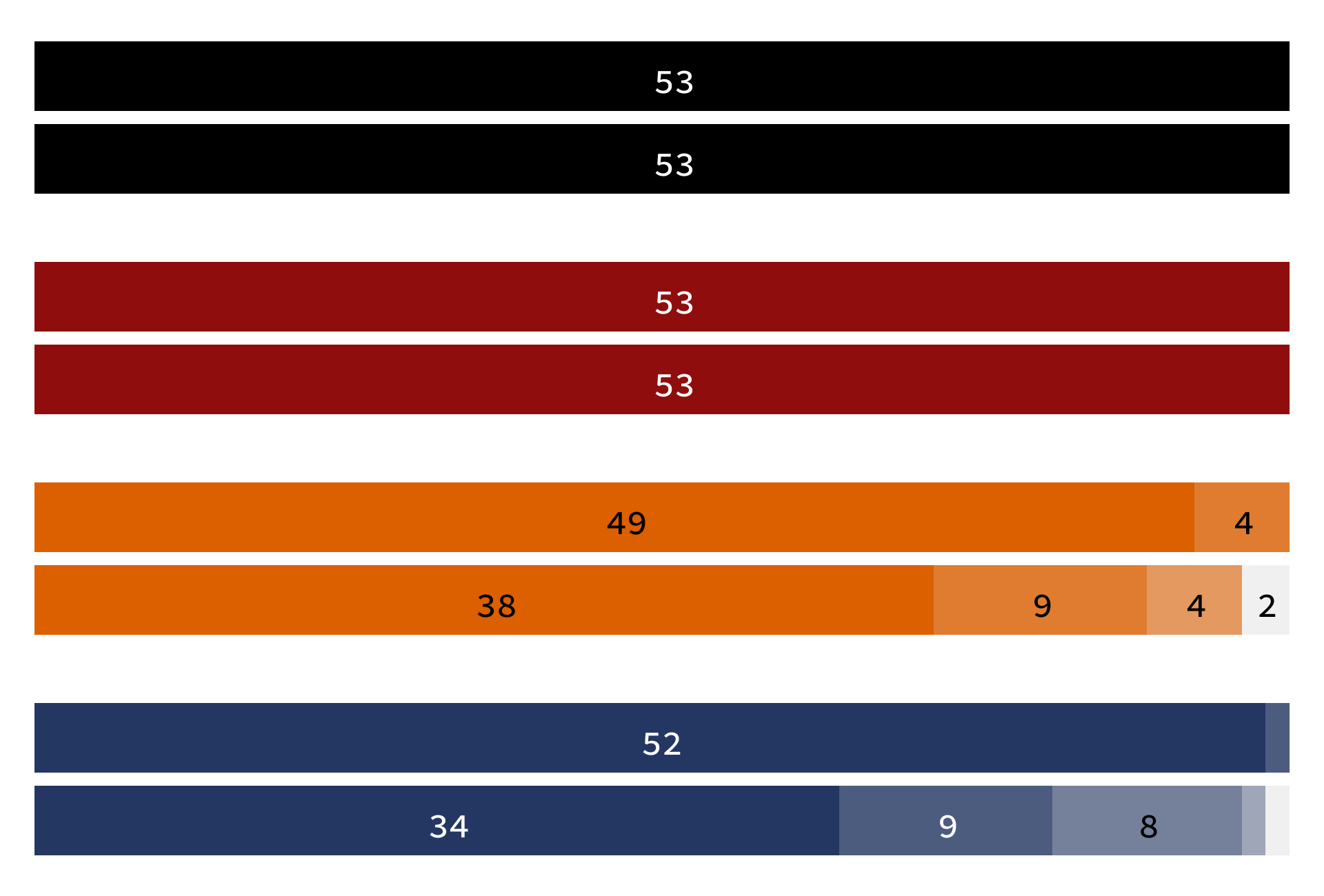
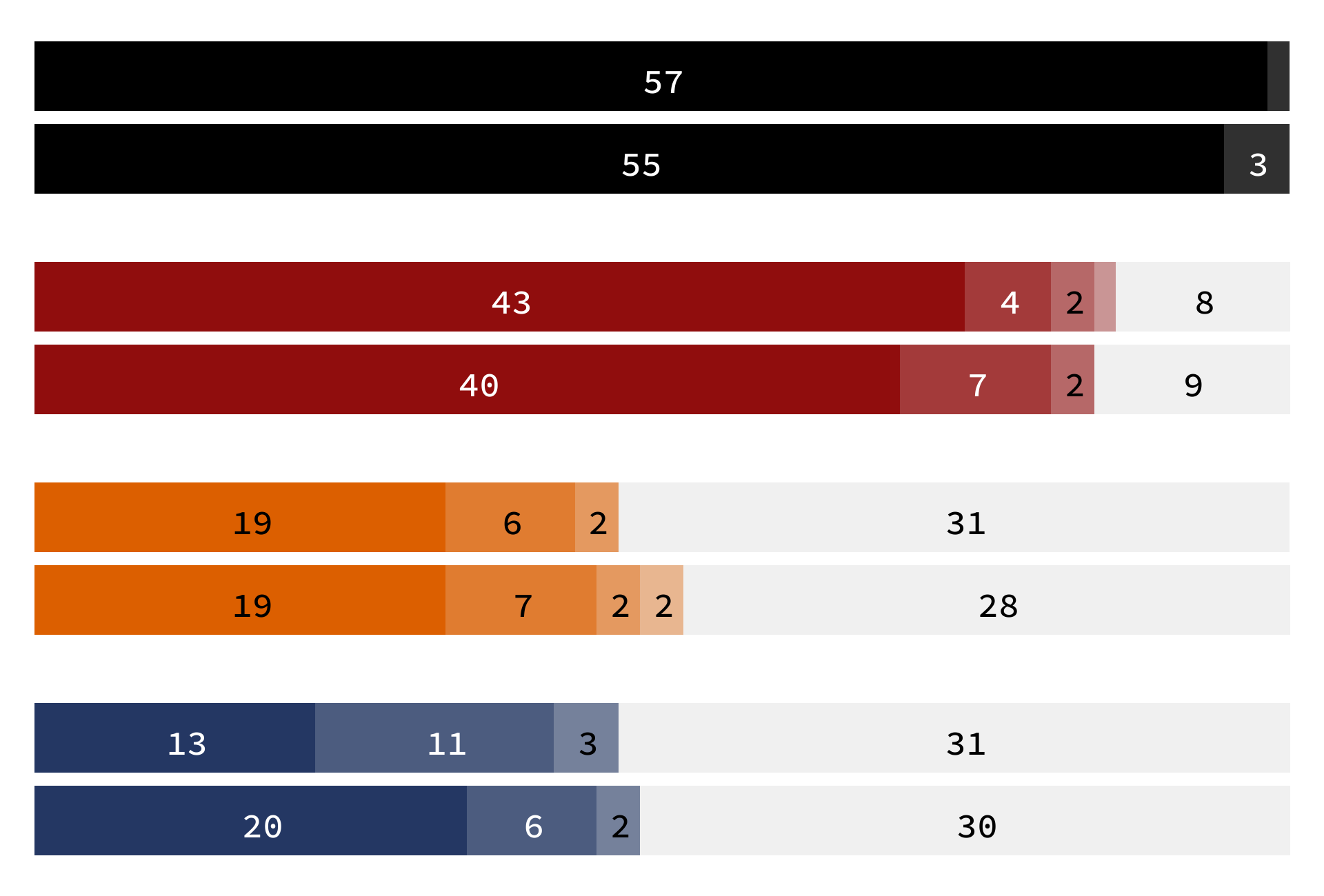
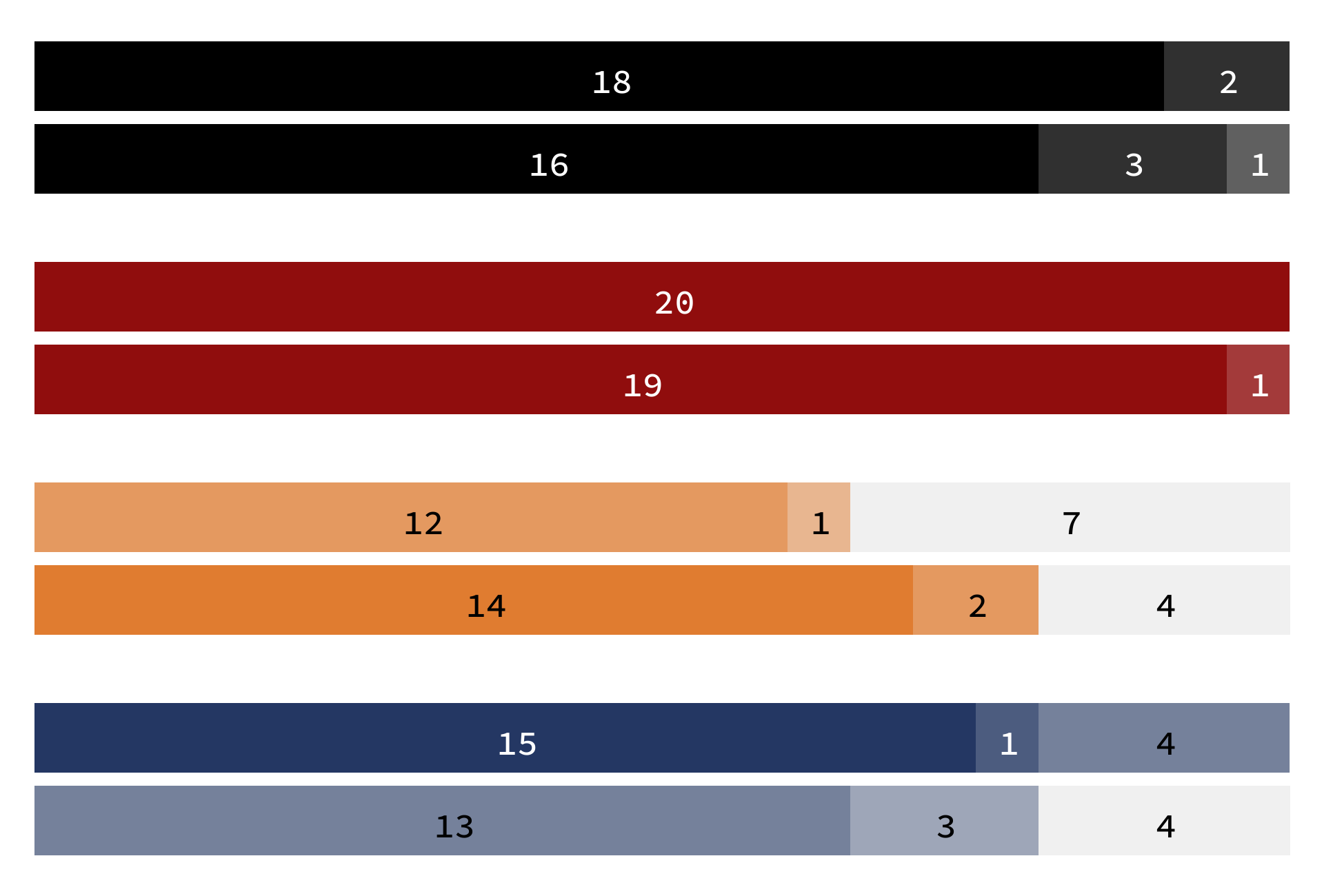
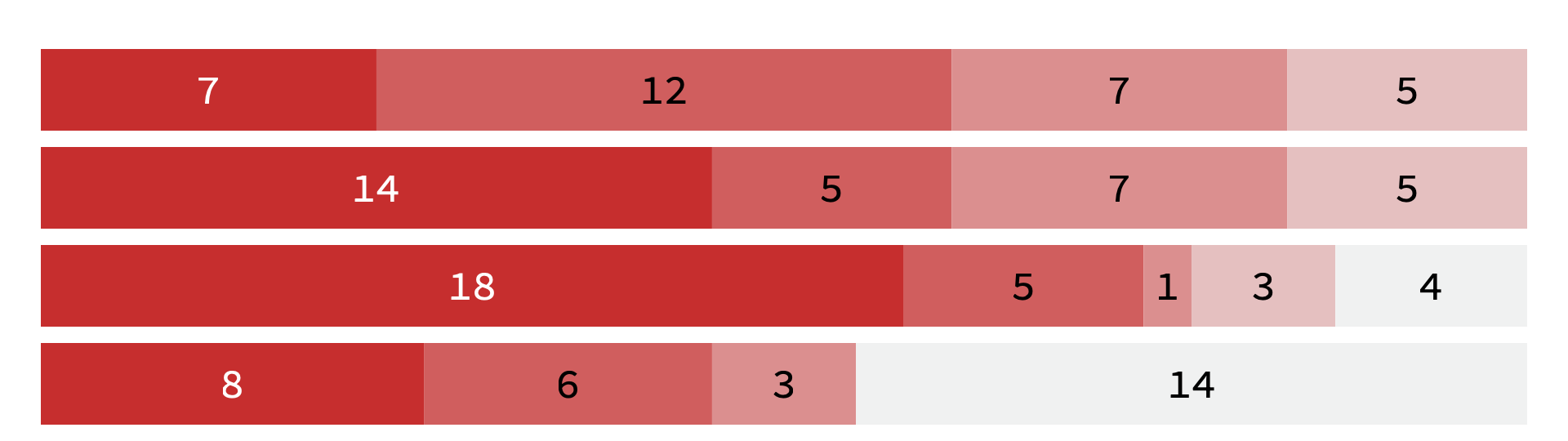
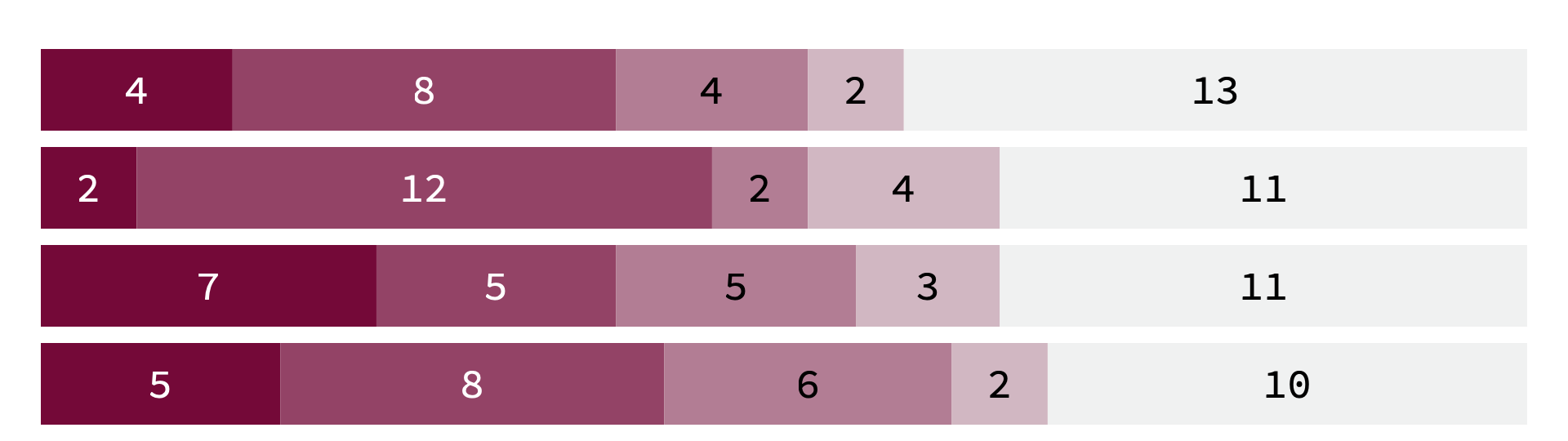
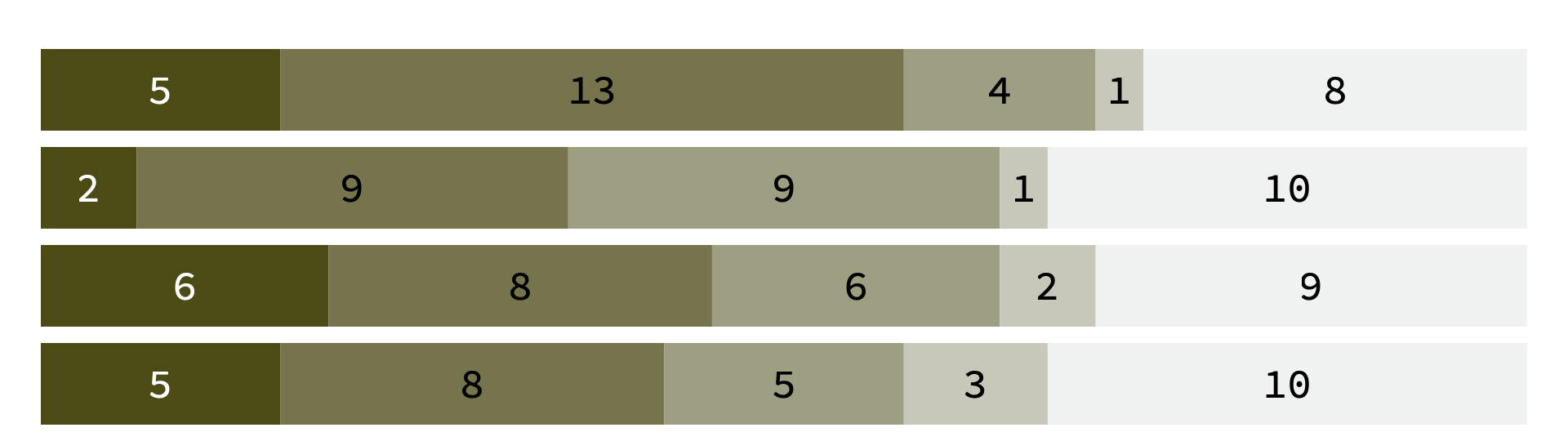
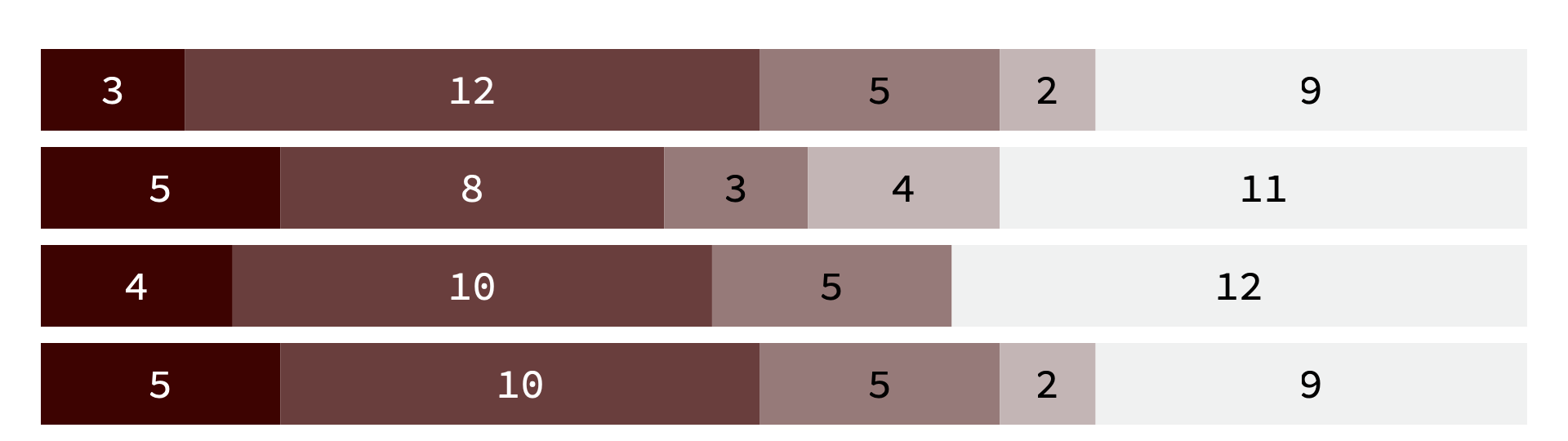
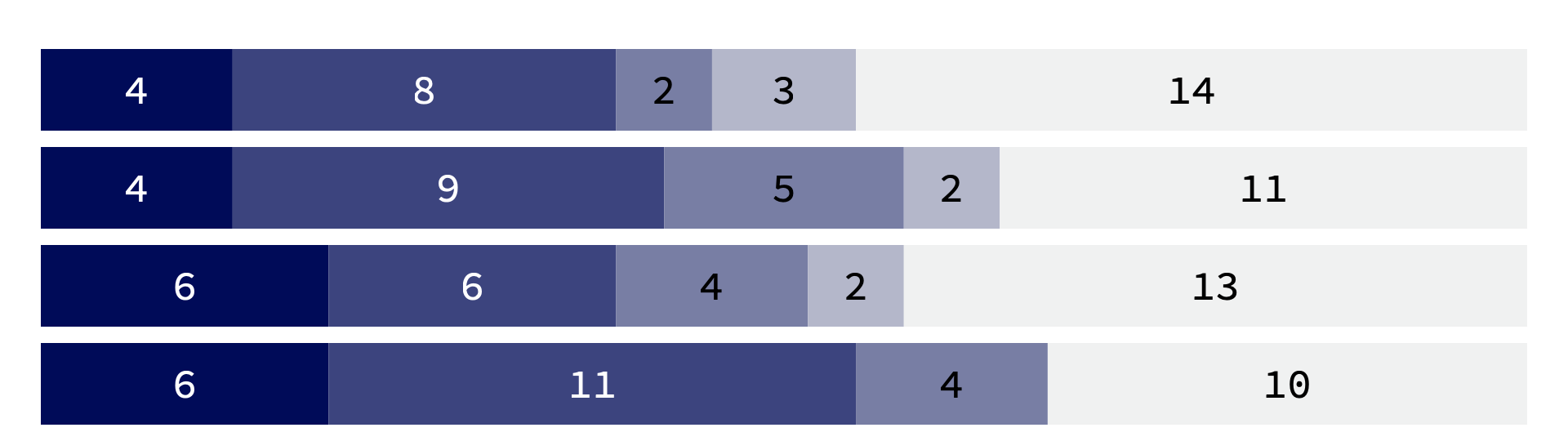
Seed pools: a DBAS-powered experimentheading
Six pool strategies, swapped without touching the property.

Programmable PBT
Properties as data structures allow for component-extraction, which allows for writing property-runners in the user-land; essentially leading to Programmable Property-Based Testing libraries.
Thank you. Questions?